Potholes are everywhere, mainly due to poor reinstatement by utility companies, and badly laid or worn out roads.
Gravel comes mainly from road break up, or driveways and accesses, or road resurfacing.
Mud from field entrances or from farms – watch out for farm signs.
Diesel is mainly found on roundabouts near fuel stations, and oil on the ‘sump lines’ at traffic lights – the centre of the lanes near the stop lines, where cars, buses and trucks drop their oil.
Worn Top Dressingand Overbanding you can see from patches or lines of shiny tar, which can be very slippery when it’s hot, as the surface can melt, as well as in the wet.
Braking is often a cause of crashes as riders panic. The advice is just relax – easy to say – and ride smoothly, just using your rear brake, not the front, and only if you need to slow.
Wet Roads are more slippery, but as long as you apply your front brake smoothly and carefully, there is usually enough grip to get the rear wheel in the air. However the advice is 70/30 front/rear which should be safer.
Applying your rear brake first in any situation can tell you how much grip is available.
A rear skid is usually recoverable, a front skid usually not.
The problem has remained unidentified within the Government’s accident data of ‘contributory factors‘ probably within ‘loss of control,’ or simply not recorded.
These are the findings based on slide marks left on the road and the severity of the impact, based on the damage to vehicles and injuries to the rider, confirmed by traffic camera footage and GPS data from helmet cameras.
Riders falling and sliding down the road take far longer to come to a stop.
Published Research has also found that circa 50% of riders cannot even achieve Highway Code stopping distances.
The research also found that the difference between the best riders and an average rider braking from 60 mph, is the difference between stopping in time and a 30 mph impact, or a 40 mph probably fatal impact for the worst riders.
Research has also shown that the problem is not related to the level of rider experience.
The situation is not helped by conflicting and misleading published advice from the DVSA and in Police Motorcycle Roadcraft, on emergency braking.
The conclusion has to be that we as a training industry are failing riders, and this must be urgently addressed.
In the meantime, riders can brake test themselves (with care) using a phone App such as iAccel Lite which is free. 0.67g is the Highway Code Standard, 0.8g is achievable with practice (with great care). Advice on braking is below, but if in any doubt please contact your local training organisation.
Riders need to practice repeatedly until the technique becomes embedded and automatic. In theory, this takes 200 repetitions to create the required ‘muscle memory‘, enabling maximum braking without conscious thought.
Riders on machines without ABS should never practise on their own, due to the risk of a skid and fall.
Racers and trackday riders should mostly already be ‘pre-programmed’ and capable of close to 1g.
Background
At the end of 2023, the MCIA called for a new motorcycle safety strategy. ‘Speeding’ and ‘Think Bike’ have been pursued for well over a decade, but motorcycle casualties haven’t reduced over the last few years.
Adhering to speed limits and being aware of hazards is only part of the problem. It’s also being able to brake in time. Having trained riders for 14 years, we know that many if not most, with training, can reduce their stopping distances significantly.
What we didn’t appreciate was the extent of the problem and the very serious implications for road safety.
For car drivers, stopping in an emergency just requires the driver to stamp on the brakes even when cornering, as almost all vehicles have ABS (anti-lock) brakes. ABS has only been compulsory since 2016 for motorcycles >125cc.
The problem has remained hidden as ‘failure to brake properly’ is not a ‘contributory factor’ in accident statistics.
A failure to brake in time could also be incorrectly classed as ‘Speeding‘, which in the 2022 accident stats shows as 10x more likely for riders than drivers. It could also be lost within ‘Failed to look properly‘ when the rider anticipated the collision but couldn’t stop in time, or within ‘Learner/inexperienced‘. In addition, 30% of collisions have no recorded contributory factors, up from 14% in 2013.
This is primarily because most motorcycles, except for some 2013 Kawasakis, don’t have ‘Event Data Recorders‘ whereas many cars do. However, extracted post-crash data from traffic cameras and rider’s helmet cameras confirms that many riders cannot stop properly.
If you compare the stopping distances from published US research from Axion Forensics, the best ‘Magazine TestRiders‘, can stop at half the distance than the worst road riders.
From 60 mph, this is the difference between stopping in time and a 40 mph probably fatal impact, as braking obeys a ‘square law’.
It is hoped that the Government, trainers, road safety organisations and charities will look at new initiatives to address this root cause, to raise awareness, encourage practise, and provide additional braking advice and training nationwide. The most vulnerable group is +17 years teenage riders who move from a 50cc ‘twist and go’ to a 60 mph 125c geared motorcycle, not required to have ABS with no additional training, but riders, parents and non-DVSA licenced trainers need to be aware of child protection issues.
It is also intended to encourage more research into the problem and to address the differing and contradictory advice from the DVSA and Police Roadcraft, on how to brake in an emergency.
Advice on Braking
Riders on ABS-equipped bikes simply need to have the confidence to apply both brakes firmly, which is often a problem due to current or previous experience on bicycles, when riders can skid and fall, or go over the handlebars.
Based on racing experience, research and theory, riders require a high degree of skill and practice to brake effectively.
Shut the throttle, apply the rear brake, sit up and lean back, all at the same time.
Reach forward and squeeze – do not snatch – the front brake with increasing pressure.
If the front wheel locks, release immediately and reapply.
If the rear wheel lifts, release some front brake pressure to stop the bike tipping forward.
Disengage the clutch as you come to a halt
When banked in a corner, just apply the rear brake.
The rear brake should be applied immediately, but on non ABS machines, may need to be steadily released again to avoid the rear wheel skidding.
Riders need to avoid snatching the front brake, instead squeezing the lever with increasing pressure, just enough to avoid locking the front wheel, but enough to transfer the weight as quickly as possible onto the front tyre, then slightly reducing the pressure as the bike slows to leave the rear tyre just lightly touching the road surface.
Riders also have to release the throttle, extend their fingers, grasp the front brake lever and pull, which is thought to extend reaction time for another 0.5 seconds or 44 feet @ 60 mph. So covering the front brake with your first two fingers is recommended, as is using the rear brake, which will be applied sooner as the rider just had to press their foot down.
Riders can also ‘trail brake’ into corners in an emergency, braking and steering at the same time, as racers do, but it requiries a high degree of skill, and very careful instruction which is best undertaken on a track.
Feedback is welcomed, and further posts and advice are planned.
The 2016 accident stats were published recently. Overall, the killed or seriously injured (KSIs) are up by 9% and 4% respectively from last year and up 6% from the average 2010-14.
The major cause of all accidents is ‘failing to look properly‘ (42%) or ‘judge others speed or direction‘ (21%), ‘careless or reckless driving’ (18%) or ‘poor turn or manoeuvre‘ (16%). These are trumped by ‘Loss of Control’ regarding fatalities (12% of accidents, but 30% of fatalities), and is the major cause of big bike (>500cc) fatalities.
For accident prevention the police now rely almost exclusively on speed cameras as there are now so few traffic cars or bikes. However, fatalities caused by speeding are steadily increasing up to 217 from 179 in 2012, with serious accidents due to speeding up 20% since 2012, to 1238.
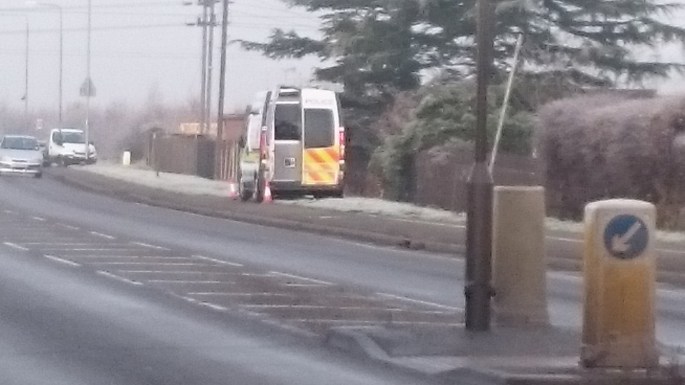
Locally, the police place speed cameras not necessarily at accidents blackspots, but seemingly to maximise revenues, typically catching drivers and riders a few mph over a 30 limit, often where the speed limit has changed. For example, the north road out of Retford (which used to be the A1) has recently been downgraded to 30 mph from 40 mph, and a speed trap is often placed just where drivers and riders would naturally accelerate, having passed all the road junctions, hotel, hospital, nursery, ambulance station, petrol station and car showroom, and the road ahead is free of nearside hazards, has a grass verge between the road and foot path, and refuges in the road, although foot traffic is nearly non-existent. 100 yds behind the camera van is a busy hazardous junction, the scene of many accidents, a few 100 yds further on is the site of several road fatalities after the limit increases to 50 mph (was 60), where there is a T junction.
Nottinghamshire had no traffic police for many years until recently, save to cover the M1, but they had a dozen officers on off-road motorcycles ‘maintaining a presence’ on the City’s golf courses and parks – presumably peace and quiet on the 18th was the priority. Police BikeSafe courses were run recently again in Notts for a couple of years, but this now involves a 100 mile round trip to Leicester, although ACPO have identified further training as a priority.
24 million riders and drivers have by now been on a ‘Speed Awareness’ Course, which clearly don’t work. ‘Speeding’ overall is at #10, 5% of accidents and 15% of fatalities which is actually up from 12% in 2010. So the major causes of KSI’s remain largely unaddressed, as there is no one to see you driving poorly. 24 million lost working days, £2 billion extracted from the public and largely wasted. These courses operate under the Criminal Justice System, which requires a ‘public interest’ test to be passed.
Apparently these courses originally included a driving assessment in your car, which is how the AA have become involved, but this has been dropped presumably to maximise revenues, and is probably now why the courses seem ineffective. What a great idea and likely worked well, based on my experience assessing motorcycle riders. There was an equivalent scheme for bikers called ‘RIDE’, but we have yet to come across anyone who’s been on one.
Speed cameras are self financing so that is likely why they are usually placed not where speeding is dangerous but where drivers and riders can be easily caught. The biblical level of ill will and mistrust this has created towards the police must be very significant and very unhelpful.
Local Safety Partnerships have had their budgets slashed – soft target – the roads are in the worse state we’ve ever seen.
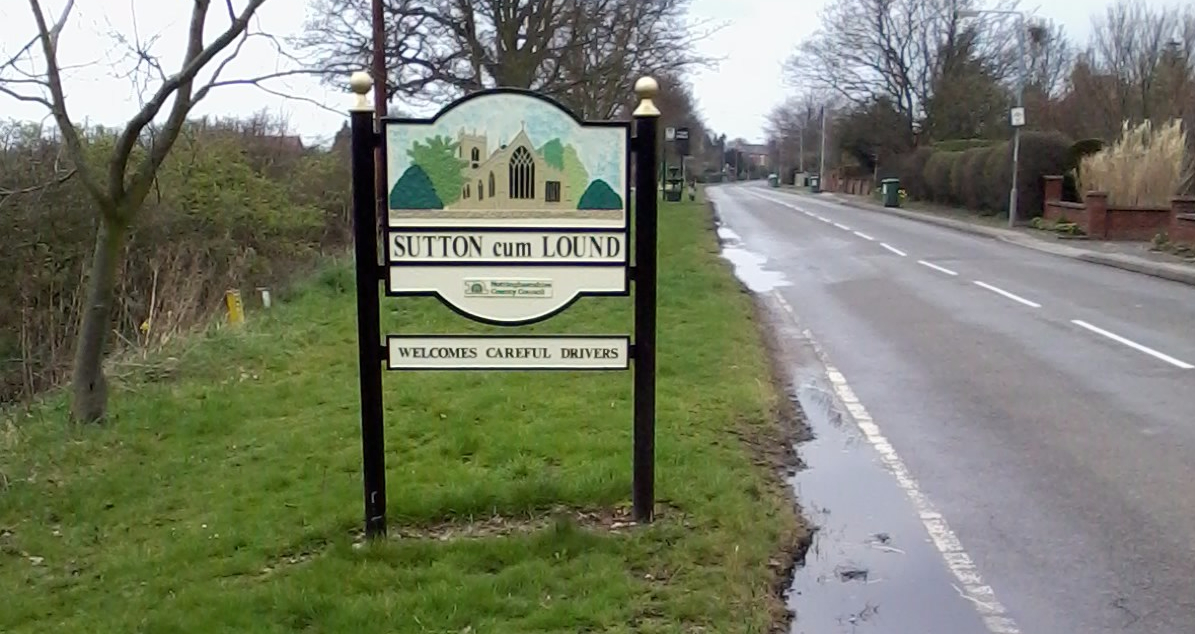
Regarding motorcycles accidents, the major factor in fatalities is thepresence of road furniture – from the World Health Organisations recent report on PTWs – making fatalities 15 times more likely. In Bassetlaw where I live, the Council have erected 100’s of new village signs, a stab of cast iron in-between 2 cast iron posts buried deep into the verges, many right next to the road, all potentially lethal to anything on 2 wheels, and breaching the usual safety standards. No obvious response 3 years on from this being pointed out to them and the police. I have asked the police recently how many serious accidents there have been with these death traps – no reply as yet.
You are 57 times more likely to be killed, mile for mile, on a motorbike than a car.
The ‘Think Bike’ campaign was great, and really seems to have made a difference, although further publicity looks unlikely.
The joint MCIA/ACPO report ‘Realising the Motorcycling Opportunity’ published in 2014 called for more use of motorcycles to reduce accidents. This seems somewhat flawed and counter productive in the short term at least, and probably unachievable in the long term in our climate. If you Google ‘ACPO’ and ‘motorcycles‘ you will see this is an abrupt volte-face from their previous position on motorcyclists as being tax dodgers and a danger to the public, and that these ‘200 mph motorised toys’ should be restricted or banned. Ferrari’s etc. apparently didn’t count.
Motorcycling is currently in serious decline, sportsbike sales have dropped through the floor, as have 125 cc sales, so in the case of motorcycles accidents, they will likely fall with the reduction in numbers, which is the only obvious reason why currently they should, but for individual riders the risks look like increasing.
‘Loss of Control’ not ‘Speeding’, is the main cause of larger capacity motorcycle accidents, (which is what we are trying to address with less then no help from the National Police Chiefs Council), but the other far more vital factors of basically riding and driving without taking due care and paying proper attention remain totally unaddressed, and with the newer distractions of smart phones etc, the wide use of recreational drugs, things will likely only get worse.
Defensive riding is a must, and additional training is available from any local motorcycle school, RoSPA, IAM, DIA, BMF or via the DVSA Enhanced Rider Scheme.
Mike Abbott MBA FCMI RoADAR (Dip) RPMT 800677 ACU 61220
One piece leathers probably give riders the best protection, although good quality textile clothing should be good enough. Two piece suits, whether textile or leather, are better if either the top and bottom can be zipped together, or if the jacket has a robust crotch strap.
We don’t accept kevlar jeans, as we don’t know how good they will be.
Both textile and leather suits should have CE armour in elbows and knees as a minimum. Shoulders, back and hip protection should also be better. There are also chest protectors available. Check your jacket has a CE marked back protector and not a piece of thin foam. Consider fitting a CE protector in the pocket, or using a separate back protector.
The European standard is EN1621-2 (Level 1 for regular use and Level 2 for sport/track).
Some leather suits are made from very thin leather, could be sheepskin. The quality of the stitching is also vital. Leather is not automatically better.