
Summary of Main Proposals
The following key proposals have been revised in response to an overall 14% increase in rider fatalities recorded in 2025, and an evaluation of DVSA ERS Completion data. An initial evaluation of STATS19, using data tools provided by Dr Owen Willams from the University of Wales, showed a 21% increase in KSIs for 16-19 years over 5 years, a 55% increase in 35-44 year fatalities in 2025, (35% over 5 years), and an 87% increase in + 65 year fatalities in 2025 (50% over 5 years). Riders, mile for mile, are > 50 x more likely to be killed than car occupants, and are the highest ‘at risk’ group.
- CBT Retesting: Mandate repeating the Compulsory Basic Training (CBT) when upgrading from an AM (moped) to an A1 powered two-wheeler (PTW).
- Braking Equipment: Replace mandatory Combined Braking Systems (CBS) on A1 class machines with mandatory front-wheel Antilock Braking Systems (ABS).
- Stability Control Systems: Mandate Motorcycle Stability Control (MSC) for all Class A machines or those exceeding 100 bhp (75 kW).
- Rider Curriculum Reform: Overhaul training and testing regimes to directly address identified deficits, particularly regarding novice/young rider competence.
- Trainer Qualifications: Require pre-test trainers to pass formal pre-qualification assessments before delivering instruction to learners.
- Braking Guidance: Review and update official DVSA guidance on emergency PTW braking techniques in accordance with empirical research findings.
- High-Speed Testing: Incorporate emergency braking manoeuvres from higher speeds (>50 mph) into standard practical licensing tests.
- Telematics & Applications: Commission a specialized mobile application or data-logging technology to evaluate braking performance during on-road testing.
- Advanced Training Alignment: Restructure post-licence “advanced rider” training to mirror “advanced driver” frameworks, prioritizing emergency machine control, lower-order skills, and defensive riding (aligning with Agilisys research recommendations).
- National Highways ‘BikerTek’ and Road Safety Scotland’s ‘Live Fast, Die Old’: Websites to be taken down and independently reviewed for accuracy, supporting evidence, compliance with standards, and appropriateness.
- Regulatory Oversight: Enforce existing statutory regulations over commercial “advanced rider” training providers to maintain consistent safe standards.
- Enforcement Scope: Rigorously enforce the Road Traffic Act (RTA) in all areas accessible to the public, including track days and training in other environments.
- Forensic Collision Analysis: Shift collision investigation practices toward root-cause prevention by video footage and Event Data Recorder (EDR) telemetry.
1. Safe Vehicles
Evaluating whether current vehicle safety regulations applied to motorcycles are sufficient for modern road conditions.
Braking Systems
1.1 Mandatory ABS vs. Combined Braking Systems (CBS) on A1 Class PTWs
It is strongly recommended that mandatory Combined Braking Systems (CBS) on 125cc (A1) motorcycles be replaced with Antilock Braking Systems (ABS), aligning them with the mandatory safety requirements currently imposed on A2 and A category machines.
1.2 Economic and Feasibility Considerations: Front-wheel-only ABS was proposed by the Fédération Internationale de Motocyclisme (FIM) as a cost-effective alternative to full ABS for price-sensitive markets. A December 2018 FIM report challenged manufacturer claims that ABS integration would undermine the 125cc market. Based on current replacement part pricing and standard retail markups, the marginal cost of implementing front-wheel ABS is estimated at under £100 per machine.
Source details: FIM Study on CBS vs. ABS Comparison Tests
1.3 Braking Efficacy Analysis: CBS mechanically engages front braking force when applying the rear brake pedal. While this increases rear-brake-only braking effectiveness by approximately 30% relative to independent braking systems, it delivers only around 70% of total available braking capacity. Conversely, research (Anderson et al., 2010) demonstrates that front-wheel ABS alone delivers stopping performance equal to dual-lever braking under CBS, while providing critical protection against wheel lockup and subsequent loss of control.
1.4 Safety Drawbacks of CBS: CBS creates hazardous dynamics in key riding scenarios. (After market de-Linking kits are available for riders of older machines):
1.4.1 Low-Speed Manoeuvring: Applying the rear brake can unexpectedly engage front brake force, causing the steering to centralize rapidly leading to low-speed capsizing. Pressure-delay valves designed to mitigate this issue render CBS inactive during light braking, making it functional only under heavy pedal application.
1.4.2 Cornering & Yaw Mechanics: Actuating front braking force while leaning induces yaw, causing the machine to stand up, run wide, or lose front-tyre traction. CBS prevents independent rear-brake control, directly conflicting with established DVSA braking advice when banked, which recommends only rear-brake control (just leaving the alternative of bringing the vehicle upright, when there is sufficient room, prior to front-brake actuation).
1.5. Novice and Learner Vulnerability: Learners and young riders operating A1 PTWs account for 50% of collisions while representing only 25% of the total motorcycle fleet (DfT 2025 accident data). A1 machines, currently reachable via CBT without a full license, attain speeds exceeding 60 mph. Mandating front-wheel ABS provides clear safety advantages, reduces required skill thresholds, and prevents front wheel-lock crashes.
1.6 Training & Skill Acquisition Benefits: ABS enables learners to practice emergency braking safely and understand traction boundaries across variable road surfaces without risking skid-induced crashes. Front-wheel skids often cause immediate low-side falls, whereas rear-wheel skids are far more manageable.
1.7 Integrated ABS: Fully integrated ABS represents the safest braking architecture by modulating and balancing optimal braking force across both wheels. While costlier, it prevents wheel locks, although cornering yaw effects remain a consideration when braking while banked (Cossalter).
1.8 Motorcycle Stability Control (MSC): Mandatory implementation of Motorcycle Stability Control (MSC) should be considered for all Class A motorcycles exceeding 75 kW (100 bhp). MSC functions as a comprehensive motorcycle stability framework—analogous to Electronic Stability Control (ESC) in passenger cars—integrating lean-angle-sensitive ABS, traction control, and pitch management to modulate braking and throttle delivery.
1.9 Regulation of High-Performance and Track Machines, Software Integrity & Rider Aids: Modern high-output engines (now approaching 200bhp, 150kW) require rider assistance systems to operate safely. Electronic safety suites should be embedded directly into vehicle electronic control units (ECU) software to prevent safety system bypass (such as fuse removal). Selecting ‘Race’ or ‘Off Road’ modes can disable rider aids on some models, which requires suitable safeguards.
1.10 Circuit Track Days & RTA Compliance: Tens of thousands of commercial track day entries operate annually on venues accessible to the public, without vehicle MOT requirements or formal technical checks. Operating speeds frequently reach double the public speed limit, resulting in regular rider falls, some severe injuries, and occasional fatalities, which will likely be unrecorded. Under Sections 12 and 13 of the Road Traffic Act (RTA), public event authorizations should be enforced through recognized bodies such as the Auto-Cycle Union (ACU) to ensure vehicular safety compliance.
1.11 Competition Machines: In May 2005, two competitors died and a third sustained serious injuries in an incident involving race machines. The subsequent inquest attributed the incident to ‘over acceleration’. At the time, machines in this class were required to have their standard-fitted traction control systems removed, raising concerns regarding the adequacy of the duty of care owed to competitors. This decision has just been reversed, and traction control is now mandatory. Nevertheless, concerns remain regarding the absence of independently established and enforced machine safety standards.
The concentration of responsibility for operating a race series, owning the majority of its circuits, managing events and establishing regulations within a single commercial entity presents a potential conflict of interest and raises significant safety concerns for competitors. Although representation on a supervisory board provides a degree of oversight, it does not necessarily confer sufficient authority to require or enforce essential safety improvements.
International competitions held in the UK operate under the standing regulations of the Fédération Internationale de Motocyclisme (FIM). Other national racing series are overseen by the Auto-Cycle Union (ACU), with events organised and managed by its affiliated voluntary clubs.
Consideration should be given to introducing measures that make compliance with ACU and FIM machine safety requirements and other applicable standing regulations mandatory for all competitive motorsport events held in the UK. This should be achieved through appropriate application of health and safety legislation and the associated duty-of-care obligations, with the objective of establishing consistent, enforceable safety standards across the sport.
The vast majority of race machines are modified road PTWs. This incident also highlights the dangers of tampering with safety features, or allowing them to be turned off as some road machines allow. Over the counter road machines can now have a power to weight ratio close to an F1 race car, and the capability of reaching 200 mph, and 100 mph in 4 seconds.
Additional Hardware and Vehicle Design Recommendations
1.12 Ground Clearance Standards: Cruiser-style motorcycles frequently exhibit severely restricted lean clearance (as low as 25 degrees), contributing to cornering grounding collisions. It is proposed that all fully laden PTWs meet a statutory minimum lean clearance angle of 45 degrees (referenced against FIM racing requirements of 50 degrees clearance).
1.13 Thumb Throttle Architecture: Thumb-operated throttles, as utilized on ATVs and some E-bikes and E-Scooters, offer a potentially safer alternative to twist grips on lower-powered PTWs. They allow riders to keep fingers positioned over brake levers continuously, reducing reaction times and facilitating safe skill transfer from cycling.
1.14 Auto-Closing Twist Grips: Investigate self-closing throttle mechanisms (e.g., dual-piece throttle tubes) to automatically disengage throttle input upon brake lever actuation, decreasing reaction latency and eliminating accidental throttle application during emergency braking.
1.15 Tyre Service Life Limits: Establish maximum statutory age limits for motorcycle tyres. Rubber compound hardening due to age significantly reduces grip and elevates catastrophic failure risks, particularly on low-mileage recreational machines
.
1.16 Sprocket & Chain Guards: Mandate lower chain run guards (“shark fins”) across all production PTWs to prevent limb entrapment between the drive chain and driven rear sprocket (aligning with ACU Standing Regulation 14.14.3).
2. Safe Road Users
Training and Testing
Various machine enhancements implemented over the last decade, including mandatory ABS for A2 and A machines, the wider use of increasingly sophisticated MSC, in addition to the numbers reducing of the earlier generations of riders who had no training, should have led to a significant reduction in fatalities.
Machines are safer. An obvious concern is that training and riding advice has not kept pace with developments. PTW KSI’s in 2025 were 6002 – up 10% over the previous 4 year average.
2.1 Pre-Test Training Reform – Addressing Competence Deficits in Novice Riders: DVSA Enhanced Rider Scheme (ERS) Completion Data (2025) indicates that only 1 in 6 young riders demonstrates baseline riding competence, with performance taking nearly 20 years of riding experience to reach close to a 50% competence threshold. 16-19 years KSIs increased by 21% to 552 in 2025 (STATS19).
Casualty statistics follow an identical trend, underscoring substantial potential for casualty reduction through reformed pre-test training. Riders also need to be taught to assume invisibility, as other road users often fail to see them. This is known as the “Unnoticed PTW” problem, or SMIDSY (Sorry Mate I Didn’t See You), the root cause of many crashes at intersections.
2.2 Instructor Qualification Reform: Unlike approved driving instructors (ADIs), pre-test motorcycle instructors currently undergo “down-training” on the job rather than passing formal standardized assessments in riding capability, hazard perception, theory, and instructional technique prior to teaching. Replacing informal instructional shadowing (“sitting by Nellie”) with rigorous pre-qualification testing is essential to rider safety.
2.3 Unlicensed and Untrained Riding: DfT 2023 crash statistics revealed that 40% of young rider fatalities under the age of 19, were unlicensed/underage. Estimates suggest unlicensed riding may reach up to 30% across all age demographics based on other countries data. Targeted public awareness campaigns and research into unlicensed untrained riding enforcement are urgently required.
2.4 Mandatory CBT Progression Retesting: Riders transitioning from a restricted 50cc automatic AM moped (limited to 28 mph) to a 125cc manual A1 motorcycle (capable of speeds over 60 mph) at 17 years should be required to retake the CBT. STATS19 data confirms a sharp tenfold increase in KSIs between 16 and 17 years of age (8 – 82 riders).
Braking Techniques & Emergency Performance
2.5 Rear-Brake Priority & Reaction Time Reduction: Official DVSA guidance recommending rear-brake engagement after front-brake application should be revised. Positioning the foot over the rear brake pedal allows immediate initial actuation, reducing reaction lag by approximately one second while the rider rolls off the throttle and reaches for the front lever. Research (Anderson et al., 2010) demonstrates techniques which improve deceleration, potentially reducing impact speeds by 9 to 22 mph (or prevents a 40 mph impact from a 60 mph initial speed due to exponential braking distance curves).
2.6 High-Speed Emergency Braking Training: Studies indicate that ~50% of riders fail to achieve Highway Code stopping distances from higher speeds, when 20% more deceleration is achievable. A recent German Institute for Two-Wheeler Safety report (August 2025) also found in addition that 50% of riders severely underestimate required stopping distances.
Mandatory instruction and practise in high-speed emergency braking is necessary, provided riders are thoroughly educated on front-wheel skid dynamics on non-ABS, or capsizing risks on standard ABS machines. High speed braking is also physically demanding, with riders having to support their weight on their arms. Crucially, emergency braking is not learned through experience so has to be taught. (https://www.researchgate.net/publication/378579579_Emergency_Braking_Patterns_of_Trained_and_Untrained_Riders)
2.7 Updated ‘Thinking Distance’ Values: TRL research demonstrates actual driver perception-reaction time averages at least 1.5 seconds, rather than the legacy 0.7-second baseline in current Highway Code tables. Official guidance and training must reflect realistic perception latencies and reaction times.
2.8 Increased Separation Distance: Recommended separation distances for PTWs should be increased from 2 seconds to 3 seconds (matching standards in Norway and New South Wales). Modern passenger cars achieve decelerations exceeding 1.2g, whereas motorcycles are physically capped at ~0.9g prior to pitch-over/rear-wheel lift.
2.9 Automatic Transmission Category: Establish a distinct licensing category for automatic PTWs, reflecting car licensing structures and accommodating the expansion of electric powertrains while ensuring manual clutch/gear operation is properly trained and tested. The throttle must be closed on an auto prior to braking, as there is no clutch.
2.10 Brake Lever Covering & Hazard Preparedness: Teaching riders to cover brake levers when approaching hazards (resting one or two fingers on the lever while maintaining throttle control) substantially decreases reaction times. While historically discouraged due to snatching/skid concerns, modern ABS equips A2/A machines to negate lockup risks, while deliberate practice builds muscle memory. This also aligns with standard BikeAbility cycling advice endorsed by the DfT.
Practical Licensing Test Enhancements
2.11 High-Speed Braking Assessment: Incorporate stopping evaluations at speeds >50 mph into practical testing. Compliance with Highway Code stopping distances from speed can be verified during on-road testing using smartphone telematic applications or compact datalogging units.
2.12 Cornering & Lean Angle Verification: Require candidates to demonstrate a minimum achieved lean angle of 35 degrees during practical testing, ideally verified via telematics. Hesitation to bank the machine (“Willingness to Lean” deficit) is a primary collision factor in cornering mishaps, with untrained riders typically utilizing only half of available lean capacity (Rose, 2022).
2.13 Mid-Corner Rear Braking: Include mid-corner rear-brake control training and practise while banked to instill correct muscle memory and prevent panic-induced front-brake application during cornering emergencies. The assumed braking distance should be doubled on bends, to account for the reliance on the safer but less effective rear brake, and the additional reduction in traction when the motorcycle is banked.
Post-Licence Training & Remedial Interventions
2.14 Mature Rider Competence: Most riders aged over 52 passed their riding test before the introduction of mandatory training in 1990. DVSA ERS data reportedly indicates competence levels below 30% within this demographic, potentially contributing to elevated collision rates. Two groups of concern are riders aged 35–44, among whom returning riders are known to feature, often resuming motorcycling later in life after their children have grown up; and riders aged over 65, including those returning to motorcycling without having received formal training, as well as those taking up riding for the first time in retirement.
Effectively promoting official DVSA post-test training and expanding the network of DVSA post-test trainers are therefore critical. This would provide an established, recognised alternative to the Government’s current promotion of a single, unregulated commercial “advanced rider” training provider and content through National Highways’ “BikerTek” website. Publicly promoted rider training should be supported by appropriate independent evaluation and due diligence, transparent evidence of effectiveness, and alignment with recognised DVSA standards.
2.15 Remedial Retraining Alternatives: Mirror the National Driver Offender Retraining Scheme (NDORS) with a National Rider Scheme (NRORS). Employ Enhanced Rider Scheme (ERS) assessments and structured retraining as statutory diversionary options for riding offenses. PTW speeding is a factor in only 5% of collisions (STATS19: 2016 prior to RSF changes); shifting focus toward broad riding competence potentially provides greater safety returns than standard “Speed Awareness” courses.
2.16 Standardized Post-Test Workshops: Introduce standardized theoretical and practical workshops (such as the “SharpRider ™” framework founded by Derbyshire CC and Dragon Riders Cymru) delivered nationwide by local RSPs and DVSA post-test trainers using community facilities or ‘Teams’.
2.17 Data-Driven Training Evaluation: Utilize DVSA Completion data rider fault analysis to target specific rider weaknesses and improve rider competence, particularly for new young riders.
2.18 Focus on High-Speed Braking & ABS Practice: Riders consistently identify braking mastery as their primary self-assessed training requirement (ERS Completion Data). Post-licence courses must incorporate telematic-monitored high-speed braking practice, leveraging mandatory ABS to practice emergency stops safely, where currently fitted.
2.19 Official Cornering Guidance (‘Slow In, Fast Out’ proposed). Circa 50% of motorcycle fatalities are thought to occur on rural bends. Official advice should explicitly reinstate recommended cornering lines, missing from Roadcraft for 50 years, and specifically the “Slow In, Fast Out” (SIFO) principle: adopting an exterior lane position on entry for maximum sightlines, entering at a speed allowing a complete stop within visible clear distance and the ability to tighten the line toward the apex to increase run-wide safety margins from oncoming vehicles or road side hazards. Once the exit is clear, applying smooth throttle to stabilize the machine exiting the turn. The risk of ‘over-acceleration’ on exit is removed by the MSC fitted to most newer higher powered machines.
Advanced Training Reform & Commercial Regulation
2.20 Re-evaluating Police-Derived Civilian “Advanced” Training: Civilian advanced motorcycle training evolved from 1930s police driving techniques. Following findings from the Agilisys study commissioned by National Highways, advanced training must be re-evaluated. Police riders undergo extensive, continuous operational training for emergency response and pursuit using marked vehicles with sirens/lights, emphasizing rapid progress. Applying high-speed police methodologies to civilian riders who do not operate under emergency exemptions is counterproductive.
An alternative riding model is ‘The Pace’ by Nick Ienatsch from the 1990’s, focussing on machine control, smooth, skillful, unhurried, planned riding.
2.21 Voluntary Advanced Sector Alignment: Voluntary sector organizations (IAM and RoSPA) utilize police examiners. Alternatively, standardizing “advanced” examination standards through the use of licensed DVSA Post-Test trainers, rather than active/retired police officers, will ensure consistency with statutory DVSA safe riding principles.
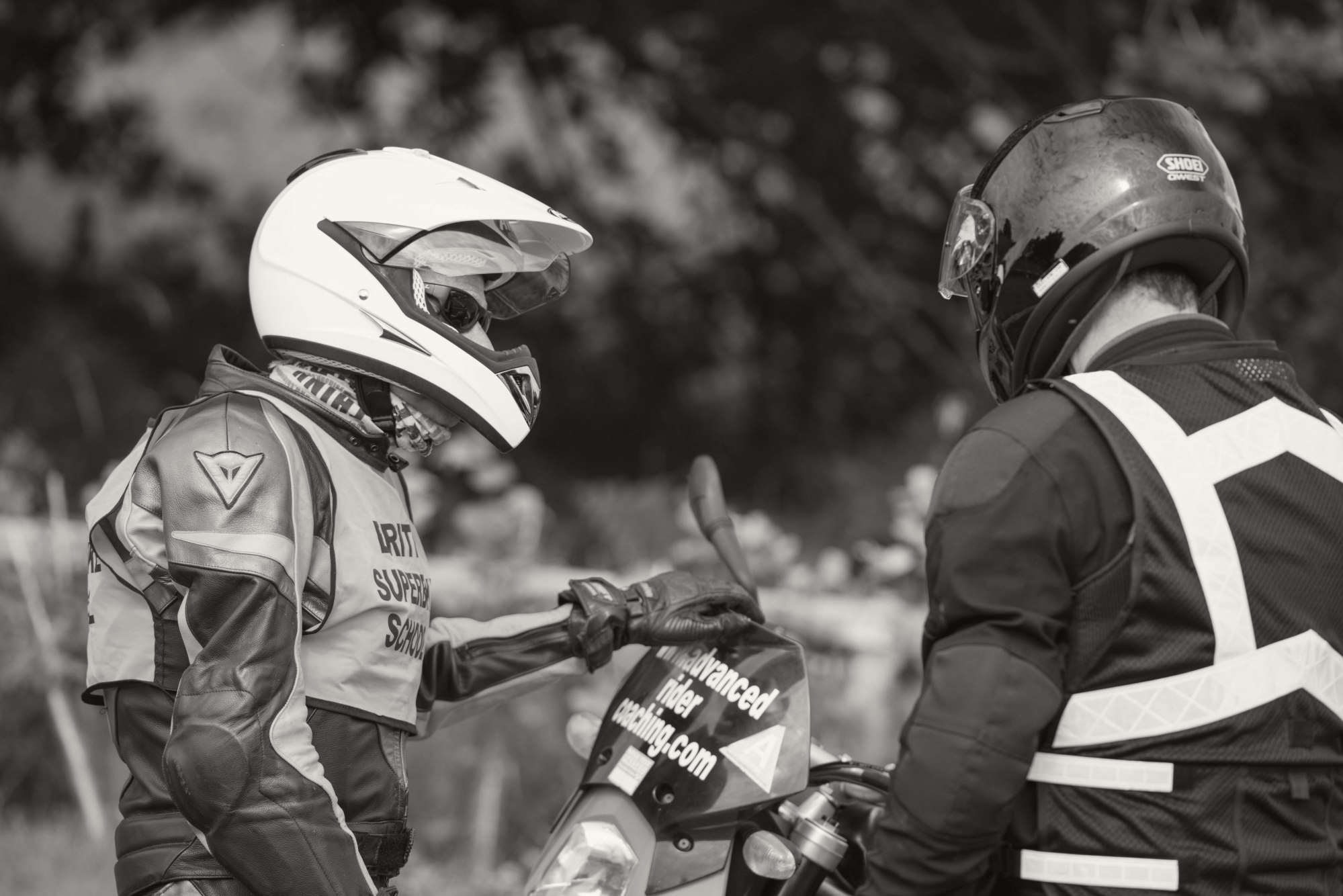
2.22 Regulation of Commercial Advanced Training Providers: The unregulated commercial advanced training sector currently lacks statutory entry barriers, leading some providers to market aggressive “performance riding” techniques that conflict with both rider safety, and official safety standards. This is the published riding manual of the company who feature in the National Highways “Bikertek” videos.
The manual, which shows excessive lean angles and close riding, also encourages riding ‘Snake Pass’: one of the Dft ‘highest risk’ roads in England, after 169 collisions in the 5 years up to 2023, 5 fatalities and 73 serious injuries.
2.23 Critique of High-Risk Commercial Training Practices: Promoted behaviours on National Highways’ ‘BikerTek’ website, are evidence of the hazardous techniques that can be delivered to general road users, for example:
2.23.1 Trail Braking into Bends: Routinely applying front braking into corner entry and junction turns. Front-brake actuation while banked increases yaw, forcing greater lean angles for a given turn radius, increasing slip risk (Cossalter), contradicting DVSA/Roadcraft rules to complete braking prior to turn-in.
2.23.2 Peripheral Vision Reliance: Relying on peripheral vision to track hazards rather than active, systematic head and eye scanning required by DVSA standards. Police Motorcycle Roadcraft also states that “riders who rapidly scan the whole environment……have a much lower risk of incident”.
2.23.3 Corner Cutting (‘S’ Bends) – Extending Out. Crossing centerlines into oncoming lanes on ‘S’ curves and elsewhere to maintain higher cornering speeds, significantly elevating head-on collision risks.
2.23.4 Omission of Safety Gear & Intercoms: Instructional delivery lacking high-visibility apparel and radio communications between instructor and student, which are both mandatory for DVSA trainers for safety reasons.
2.24 Agilisys Report Evidence: The Agilisys research for National Highways synthesis concluded that post-licence “advanced rider” motorcycle interventions across Great Britain show no empirical evidence of improving safety outcomes.
‘In short, while there are numerous post-licence motorcycle interventions being offered in Great Britain, little has been evaluated and the evidence for what works and what does not is almost non-existent.‘
Regarding the 2022 evaluation of National Highways BikerTek “advanced riding” intervention within the report – “Over half of respondents reported that the campaign had changed their behaviour.” Given that the promoted behaviours contradict official road safety guidance, as evidenced in paragraph 2.23, this finding raises significant concerns about the campaign’s potential safety implications. These concerns are particularly pertinent given that 74% of respondents were aged over 55, alongside the 2025 reported 87% increase in fatalities among motorcyclists aged 65 and over. The findings therefore raise questions about the appropriateness of the promoted behaviours and the need to ensure that interventions reinforce, rather than undermine, established road safety standards. It is important to recognise that riders over 55 will likely have not had any prior training against which to compare alternative advice.
A further study on IAM “advanced” trained riders found higher speeds, different crashes, an unhelpful blaming attitude change, and more dropped machines.
Evaluation of Advanced Motorcycling | Agilysis
2.24.1 Absence of Independent Evaluation of Commercial “Advanced” Training Providers.
No commercial “advanced” trainers were included in the survey, including the provider responsible for the “BikerTek” content, failing to assess the effectiveness and safety of the advice and training delivered. Such an evaluation should have been undertaken as part of due diligence before publication. However, this may be one of two further reports concerning other advanced training providers that Agilisys has stated are being withheld.
If the training has not been independently evaluated, it should be withdrawn pending a robust assessment of its content, safety and effectiveness. Furthermore, withholding evaluation findings on training schemes where the results may be unfavourable is contrary to the public interest, particularly where those findings could have significant implications for rider safety.
2.24.2 Absence of Independent Evaluation of Official Published Riding Advice.
Road Safety Scotland’s ‘Live Fast, Die Old’, presents a group of 5 riders blatantly ignoring separation distance safety requirements. The DVSA advice is to maintain a minimum 2 second gap, which varies between 12 and 25 bike lengths, from 30 to 60 mph. The alternative is a staggered formation 1 second apart, but this is not suitable, as advised, on narrow or twisty roads. Even then they are too close (6-13 bike lengths). Multi-machine crashes in groups are commonplace. Every second closer potentially increases impact speeds by 15 mph.
No hi viz clothing on any of the 5 riders shown.
The safety issues with group riding are well known and include ‘Herd Mentality’, the ‘Catch-Up’ Trap, ‘Performative Riding’, ‘Target Fixation’ (on the machine in front), ‘Intra-Group Chaos’. Advice is available on planning and managing group rides, roles and responsibilities, much of which is missing.
The advice could also be changed to ride at a minimum 3 seconds separation distance, (as braking distance can double on bends), particularly for groups on narrow roads.
In addition, the advice on emergency braking needs reviewing. It’s suggested at 10/90 rear/front in the dry in an emergency (Cossalter), not 30/70 as stated, which is for wet roads. There is also advice to release the front brake and apply more rear brake as you come to a stop, due to a higher skid risk. This appears to be a misunderstanding, as the rate of deceleration and therefore the skid risk at all speeds is the same, but may explain why this advice also appears in Police Motorcycle Roadcraft.
ABS has been compulsory on A1 and A category machines since 2016, which prevents skidding. The advice might be based on skid marks found in the past just before impacts, which would have likely been caused by the rider increasing the pressure on the front brake in response to an imminent impact. Later machines will likely capsize instead of skidding, due to ‘mass centralisation’ introduced in the 1990s, but the latest machines with pitch control will neither skid nor capsize.
The advice to change down through the gears while emergency braking is an unnecessary distraction, and could cause the rear wheel to lock and skid.
The outcome, if followed, will likely be longer braking distances, and potentially higher impact speeds. Closing the throttle is also missed.
Overall, this is a serious concern, as 94% of riders stated that watching the videos had resulted in a change of behaviour.
In contrast ‘Know the Dangers’ from the Shiny Side Up Partnership, shows schematics of actual collisions at junctions, and the causes, which is informative and factual.
It is vital that official advice in any form is supported by evidence, and is compliant with other official published advice to avoid increasing riders’ risks.
2.25 Statutory Enforcement of Commercial Trainers: Existing statutory frameworks for licensing post-test trainers (RPMT) should be enforced strictly across all commercial “advanced” riding schools, eliminating unregulated instruction and establishing compliance with uniform national standards centered on basic vehicle control, hazard avoidance, and defensive riding. (NB Police ‘Class 1’, or the current ‘Police Advanced’, are riding qualifications, not training qualifications. They do not, in themselves, qualify the holder to attend the DVSA’s Post-Test Trainer course without further training).
Track and Off-Road Training Environment Regulation
2.26 Following the 1988 amendments, the Road Traffic Act applies to all venues accessible to the public, rendering race circuits statutory toll roads. Commercial track days facilities operating without ACU-licensed coaches or statutory technical oversight present unquantified safety risks. Enforcing RTA compliant event authorization, mandatory circuit safety inspections, capping track capacity, effective training, and mandating onboard safety systems where OEM fitted (ABS/TC) will reduce the hidden casualty rates on publicly accessible venues, and clearly differentiate racing practises unsuitable for the public highway.
2.27 Exploiting Alternative Training Environments: Training in alternative environments is already recognised within the DVSA’s Enhanced Rider Scheme (ERS) when delivered by licensed trainers. These environments provide valuable opportunities for riders to develop and refine machine control, enhance riding skills and practise essential techniques away from the hazards associated with public roads. Key skills, including high-speed braking, cornering and throttle control, can be taught and developed in a controlled environment that offers a comparatively safe setting and is attractive to many riders. This approach can build rider confidence, enhance competence and promote safer on-road riding practices. However, these benefits depend on maintaining established riding standards and ensuring that trainer licensing, oversight and compliance are effectively enforced.
3.0 Collision Investigation & Root-Cause Analysis
3.1 Reform of Collision Investigation Methodology: Current collision investigations focus primarily on criminal liability rather than preventative root-cause analysis. Incorporating forensic telemetry from vehicle Event Data Recorders (EDRs), multi-angle video data, and detailed mechanical inspections will help identify true underlying collision factors (e.g., initial reaction delays, improper braking distribution, or machine failure).
4.1 Coronial Proceedings & Expert Evidence: Inquests into fatal track and road collisions should prioritize non-adversarial forensic engineering analysis, ensuring safety recommendations regarding vehicle technology and condition are formally recorded.
4.3 Addressing Hidden Primary Crash Causes: Forensic collision data (Wilson, NZ) reveals that emergency braking failure – manifested as front-wheel lockup skidding or total hesitation/under-braking due to fear of skidding or capsizing – represents the single largest contributor to motorcycle fatalities. Categorizing collisions under broad “Loss of Control” labels conceals these root mechanisms.
4.4 Collision Location Classification: Standard STATS19 reporting categorizes crashes as “not within 20 metres of a junction,” obscuring the high concentration of rural bend collisions. STATS19 forms should explicitly include an “On a Bend” parameter.
4.5 Independent Forensic Crash Investigation Unit: Given that annual UK motorcycle fatalities total under 400 cases, establishing a specialized independent forensic investigation team to analyze every fatal PTW incident will yield actionable safety data to drive policy, training, and vehicle safety standards.
4.6 AI & Predictive Analytics on STATS19 Data: Deploy existing AI data-analytics frameworks across historical STATS19 datasets to identify changes and emerging casualty trends in real time. This to focus attention and resources expeditiously for the highest potential benefit, and investigate root causes. Both what is working and what is not.
The University of Wales under Dr Owen Williams is developing an AI data analysis tool. This now includes contributory and other factors in the analysis.
4. Conclusions
4.1 Evidence-Based Interventions: Substantial empirical research and collision data identify clear root causes of motorcycle casualties. Preventing serious injuries and deaths requires updating rider training frameworks and mandating comprehensive modern machine safety features, specifically ABS and MSC.
4.2 Core Skill Focus: Emergency braking and cornering competence represent the primary skill deficits (ERS data), and are probable prime root causes of rider casualties. Official advice, pre-test training, and practical licensing examinations must be updated to teach and test these skills effectively using modern telematics.
4.3 The ‘Unnoticed PTW’ problem: The apparent invisibility of PTW riders manifests itself as collisions at intersections which are > 30% of collisions. PTW riders must be made aware of this, and be taught to ride as if they have not been seen.
4.4 Post-Licence Training: A Strategic Overhaul: Police-derived methodologies used in civilian advanced commercial rider training should be reconsidered and either replaced or restructured to align with established advanced driving models, (as proposed by Agilisys). This prioritises fundamental vehicle control, emergency braking and hazard perception, rather than high-speed progress. The National Highways ‘BikerTek’ and Road Safety Scotland’s ‘Live Fast, Die Old’ websites should be withdrawn immediately and replaced with revised content that fully complies with published safety standards, and does not contradict established safety guidance.
4.5 Commercial Trainer Licensing: Mandatory statutory licensing must be enforced for all commercial post-licence motorcycle trainers and organizations via the DVSA RPMT scheme, eliminating unregulated instruction and enforcing high consistent safety standards.
4.6 National Competence Target: The overarching policy goal is to elevate overall DVSA-evaluated rider competence from the current sub-50% level to at least 80% across all licensed riders, targeting high-risk young and novice riders alongside experienced licence holders.
4.7 Employ AI-driven analytical technology to analyse collision and related data: Real-time, comprehensive analysis of enhanced collision data and associated variables will enable the early identification of collision hotspots, emerging patterns and trends. This will support timely root cause analysis and facilitate targeted, evidence-based remedial action to reduce collision risk, improve road safety and prevent recurrence.
Submitted by:
Mike Abbott MBA, RoADAR (Dip), DVSA RPMT 800699, ACU Coach #62210
The British Superbike School ™
Applewood, Old Hall Lane, East Markham, Newark, Notts NG22 0RF
Tel: 01777 818013 | Mobile: 07939 041606
Web: https://britishsuperbikeschool.com
18th October 2026
(Revised on 28th October to include Safer Roads Scotland Ride Fast, Live Long campaign Para)

