

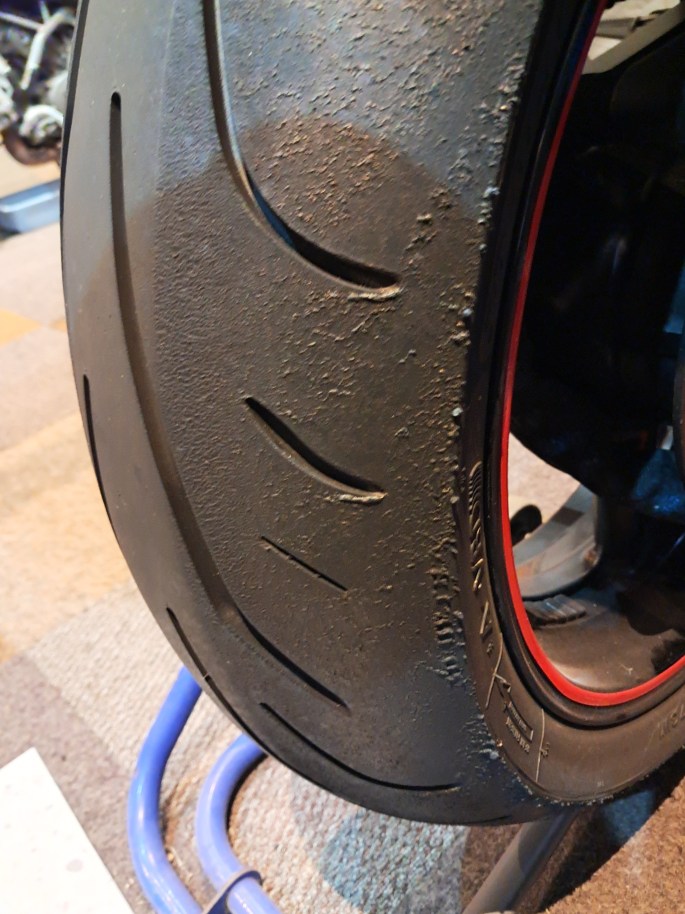
There are an extraordinary number of internet posts on tyres and tyre wear, particularly on track bikes.
And very varied and often contradictory diagnostic advice on make, suspension setting, tyre pressures etc.
Tyre Type
You can use road tyres on track days, but avoid using track tyres on the road.
They have very little grip when they are cold, and are very unlikely to reach their operating temperature on the road.
You can get ‘cold tears’ in the rubber if you don’t warm them up properly.
We have constant issues at The School with riders failing to warm up their tyres, and falling on the first lap. You need two full laps at a gradually increasing pace to be safe.
This applies to road tyres too, although 1 lap should be enough, dependent on type.
Generally speaking, the more tread, then the quicker they heat up due to tyre flex.
Tyres have a relatively narrow range of temperature at which they are designed to work.
Slicks in particular need great care to warm properly. Even with tyre warmers, after you’ve waited in the collecting area for a couple of minutes, the tyre would have lost much of its temperature.
‘Wets’ are usually only needed when there is standing water on the track. Otherwise, intermediate or sports tyres are usually better. Wets wear very quickly if the track dries, and can become very slippery.
Tyre Pressures
Consider using the manufacturer’s suggested tyre pressures, but reduce the cold pressures by 2 psi front and back on trackdays.
This to compensate for the increases temperature and pressure.
Running with lower pressures may sometimes give marginally more grip, but causes very high wear rates.
Tyre Wear Patterns
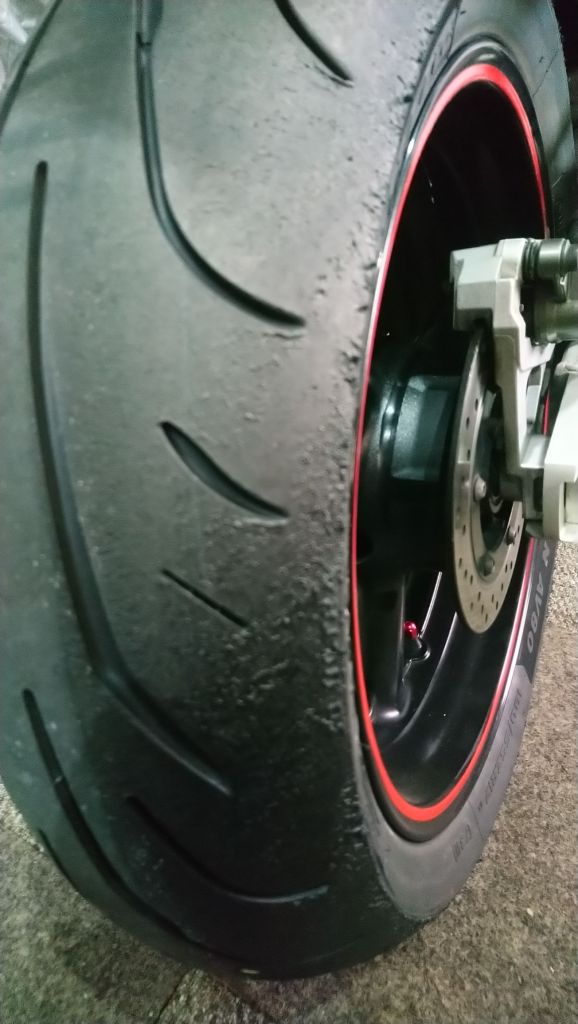
This is a typical early tyre wear pattern on a track bike with rubber building up just behind the grooves.
‘Graining’ has just started, with rubber being worn off the surface of the tyre and getting stuck back onto the edge or the carcass.
Tyres ‘slip’ on cornering, moving sideways as they rotate, which can cause strange wear pattens on treaded tyres.

This is my R6 front tyre from Donnington a couple of years ago. It has started to melt, due we think to the tyre being just 1 psi lower than was recommended.
Different makes and models of tyres can weather very differently.
Tyre Compound
On track days, you could change to an optimum compound of tyre to suit the conditions, but you’d have to be on race pace to make this worthwhile.
If you’re not, the tyre may not get to temperature and you’ll end up with worse grip.
The Theory
If you want to know how tyres (and suspension) work, look at ‘Motorcycle Dynamics’ by Vitorre Cossalter, which covers this in great detail and is based on lab tests, not opinion.
You’ll need degree level maths to fully understand it all, but even without, you can see the factors involved.
The relationship between suspension settings and tyre wear is very complex. As tyres, riding speeds, riding styles, and bikes vary considerably, be aware of suggestions based on tyre wear patterns alone.
Mike Abbott, British Superbike School
 British Superbike School